Thinking about moving to Columbia and trying to match the right neighborhood with a realistic daily commute? You are not alone. Columbia offers a mix of city living, leafy suburbs, and lake life, and each choice affects how long you spend in the car. In this guide, you will get a clear, local look at top neighborhoods and suburbs, what commutes really feel like, and how to plan your search with confidence. Let’s dive in.
How Columbia works for commuters
Key job centers
Columbia’s commute patterns revolve around state government, the University of South Carolina, health care, and Fort Jackson. These hubs drive most daytime traffic into the city center and the eastern corridor. You will notice event-based peaks during university schedules and military graduations, plus steady weekday flows into state offices.
Typical travel times
Richland County’s mean one-way commute time sits in the low to mid 20-minute range. The latest American Community Survey window posts a figure near 23 minutes, which is shorter than many large metros but still means a lot of people drive 20 to 35 minutes from nearby suburbs. Use this as a baseline when you compare in-town and suburban options. U.S. Census QuickFacts reports are a helpful reference point.
Hot spots and construction
The biggest pinch point is the I-20, I-26, and I-126 interchange, known locally as Malfunction Junction. The state’s multi-year Carolina Crossroads program is rebuilding this area with widened lanes and redesigned interchanges. Expect staged construction, lane shifts, and periodic delays on northwest and west-side routes for the next several seasons. You can track project context through industry updates on the Carolina Crossroads improvements.
Transit and car-lite options
The COMET, Columbia’s regional transit system, runs local routes, USC partnerships, a downtown circulator called the Soda Cap Connector, and vanpool programs. Transit works best for downtown and USC-centric commutes. Suburbs are still largely car dependent, so if you want to ride instead of drive, focus on neighborhoods near frequent routes and central stops. Review maps and frequency on The COMET’s website.
Airport access
If you travel for work, Columbia Metropolitan Airport (CAE) offers nonstop service to major hubs and has adjusted routes in recent seasons as passenger volumes returned to pre-pandemic levels. Many professionals prefer CAE’s convenience over a long drive to a larger airport. Confirm schedules and new announcements before you plan frequent trips. See current airlines and nonstop options on CAE’s airline page.
Family amenities that shape weekends
Two quality-of-life anchors stand out for many buyers: Riverbanks Zoo & Garden and Lake Murray. Riverbanks is a major regional draw, with new phases of expansion underway that keep it top of mind for families. These amenities influence where people want to live and how they spend weekends. Read about the latest improvements in Riverbanks’ expansion news.
Neighborhoods inside Columbia
Downtown, the Vista, and BullStreet
If you want walkability, nightlife, and short trips to state offices or downtown employers, start here. You will find condos, lofts, and new infill townhomes, along with active redevelopment in the Vista and BullStreet districts. Yards are limited, but dining and entertainment are close. Typical commutes to state offices and USC run about 5 to 15 minutes.
Five Points and Shandon
These areas near USC offer early-1900s bungalows, craftsman homes, and a mix of rentals. They attract students, faculty, young professionals, and families who value proximity to campus and quick access to downtown. Renovated homes in these pockets can draw strong interest, especially those with updated systems and preserved character. Expect short commutes to central employers.
Forest Acres, Rosewood, and Heathwood
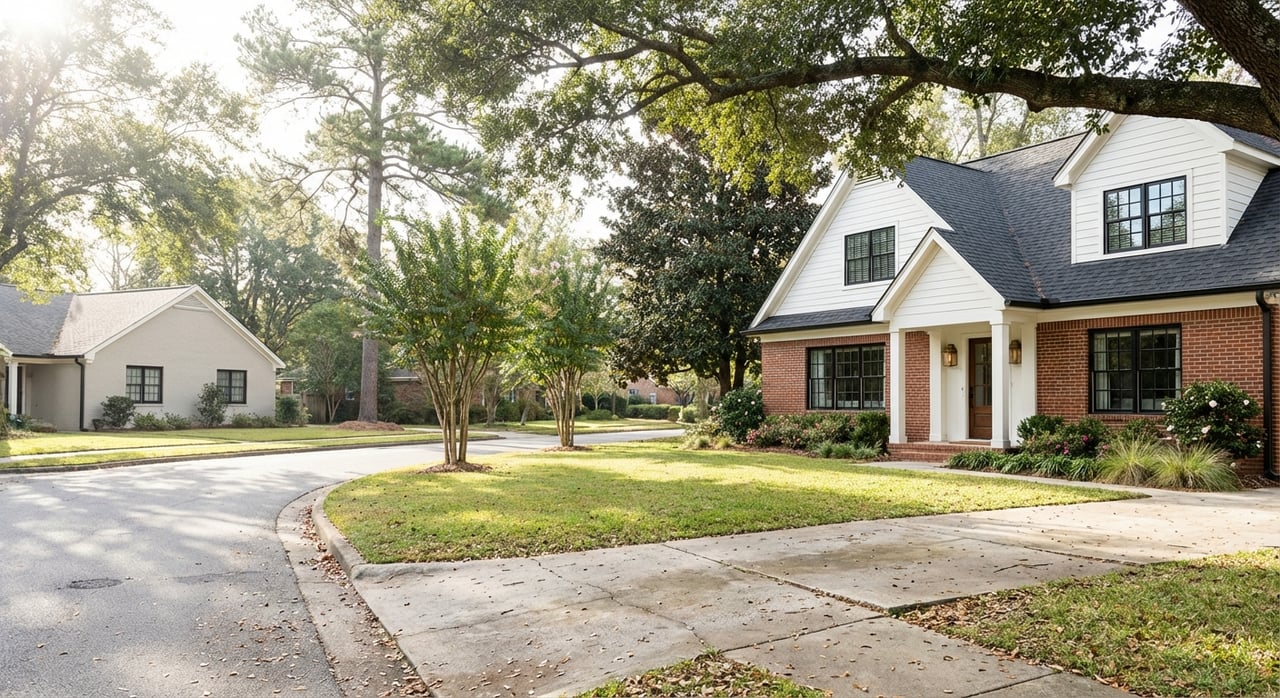
If you want an established, tree-lined setting with a manageable drive, these inner-ring neighborhoods are worth a look. Housing ranges from mid-century ranches to renovated historic homes on larger lots. The vibe is quieter and more residential, with parks and local retail nearby. Downtown is still reachable within a practical window for most workers.
Northeast Columbia and planned communities
Master-planned options like Lake Carolina and small lakeside enclaves such as Arcadia Lakes sit on the northeast side. You will see a mix of single-family homes and townhouses, with newer construction common in many subdivisions. These neighborhoods give you easier access to eastern employment corridors and direct routes to Fort Jackson. Commute length varies with proximity to major arterials and interstates.
Suburbs compared: Blythewood, Lexington, Elgin
Blythewood
Located north of Columbia, Blythewood blends a small-town center with newer subdivisions from the 2000s and beyond. Residents choose it for yard space, newer floor plans, and neighborhood amenities. Drives into central Columbia or USC often land in the 20 to 35 minute range, depending on your exact neighborhood and time of day. Learn more about community events and services on the Town of Blythewood site.
Lexington
Set west of Columbia near Lake Murray, Lexington offers a lively town core and regular community programming. Housing options range from modest ranches to higher-end lake properties, with many suburban subdivisions in between. Typical drives to downtown can be 15 to 30 minutes, shaped by your location and the I-20 corridor. For area context and local happenings, visit the Town of Lexington site.
Elgin
Northeast of downtown, Elgin provides a quieter, lower-density setting with a mix of older homes and newer subdivisions. Buyers often pick Elgin for lower entry price points and a small-town feel. A downtown commute commonly runs 25 to 40 minutes based on route and start point. If you are flexible on commute time, Elgin can stretch your budget.
Tradeoffs to weigh
- Choose downtown or USC-adjacent neighborhoods if you want the shortest commutes and walkable dining and entertainment.
- Pick Blythewood or Lexington if yard space, newer construction, and family amenities matter more than a 20 to 35 minute drive.
- Consider Elgin and similar pockets if you want lower price points and a small-town feel and you are comfortable with a longer commute.
Commute corridors and strategies
Primary interstates to know
Columbia’s backbone corridors are I-26, I-20, and I-77, with I-126 feeding directly into downtown. The I-20 and I-26 junction has long been the busiest pinch point and is now under major reconstruction through the Carolina Crossroads program. If your job sits just off an interstate, choose a neighborhood with direct access to that road to avoid long surface-street delays. See an overview of I-26’s role across the region on the I-26 in South Carolina page.
Transit choices and park-and-ride
If you prefer not to drive every day, focus on neighborhoods close to reliable COMET routes or with easy access to downtown circulators. Many suburban routes run less frequently, so check schedules before you commit to a location. COMET also supports vanpools on select corridors, which can help if you have stable commute hours. Plan your options on The COMET’s site.
Fort Jackson considerations
Fort Jackson drives a lot of daily traffic on the east side of Columbia and creates peak surges during graduations. If base access is your priority, look for neighborhoods with straightforward routes to Strom Thurmond Boulevard and Lee Road. Eastern Columbia, parts of the northeast, and areas near major north–south arterials are commonly used by personnel and staff. Newcomer context is available in Fort Jackson’s welcome handbook.
Long-distance search checklist
- Run two or three test commutes at peak times for any home you like. Note how construction staging and merges affect your window on I-20, I-26, and I-126. Reference current work on the Carolina Crossroads improvements.
- If schools factor into your decision, verify attendance zones directly with the district. Boundaries can change year to year. Start with Richland One’s boundary tools and confirm details with the appropriate district office.
- Ask for high-resolution photos, video tours, measured floor plans, and recent utility bills. A local agent can preview the exterior and lot to flag noise, slopes, and drainage.
- Review HOA rules, yard and fence policies, and any planned road projects with municipal or state sources before you offer. Construction timelines can affect your daily drive.
- If you intend to use transit, confirm route frequency, first and last trips of the day, and park-and-ride options on The COMET.
- Decide which tradeoffs matter most. List your top three: commute time, walkability, yard size, newer construction, or lake and recreation access.
How to shortlist quickly
If you work downtown or at USC
Start with Downtown, the Vista, Five Points, and Shandon for the shortest drives and bikeable options. Add Forest Acres or Rosewood if you want more yard and trees while keeping a practical commute. Consider how often you will attend campus events or work late, since that makes proximity more valuable.
If you split between downtown and Fort Jackson
Focus on Forest Acres, Rosewood, and the northeast side for direct routes to both. Test morning and evening runs to see which corridor fits your schedule. A few minutes saved in each direction adds up over a year.
If you want suburban space and lake life
Lexington and the Lake Murray area balance recreation with a workable drive to downtown. Try your route during peak hours and during any sporting or lake events to see how timing shifts. The payoff is more space at home and easy weekend access to the water.
Next steps with local guidance
Relocating is simpler when you have a clear plan and a local advocate who knows the streets, schedules, and tradeoffs. If you want an expert partner to help you compare neighborhoods, test commutes, and coordinate virtual tours, Patti & Parker are here to help. Our team pairs neighborhood-level insight with responsive communication, so you can make a confident move on your timeline.
Ready to start? Reach out to the Smith Real Estate Group to schedule a consult and map your Columbia short list.
FAQs
What are average commute times in Richland County?
- The U.S. Census reports a mean one-way commute near 23 minutes, with many suburban drives in the 20 to 35 minute range depending on location and time of day.
Which Columbia neighborhoods have the shortest drives to USC and downtown?
- Downtown, the Vista, Five Points, and Shandon offer the shortest trips, while Forest Acres and Rosewood balance a quick commute with more yard and trees.
How will the Carolina Crossroads project affect my commute?
- Expect staged construction, lane shifts, and periodic delays around the I-20, I-26, and I-126 interchange, especially during peak hours, for the next several seasons.
Does Columbia have public transit I can rely on for daily commuting?
- The COMET works best for downtown and USC-area commutes, with local routes, a downtown circulator, and vanpools; many outer suburbs remain car dependent.
What should I check if I am moving with school-age children?
- Verify attendance zones directly with the district before you offer, starting with online boundary tools and then confirming details with the appropriate office.